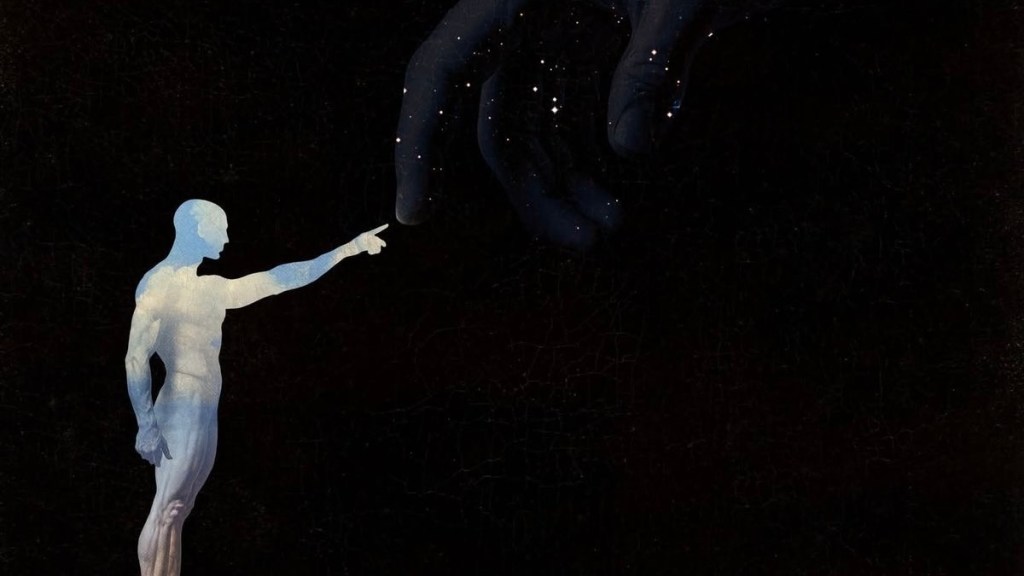
We know the story of Abraham and Moses. We have the luxury of the next chapter.
And the more I think about these men, the more I see two master manifestors: men who were willing to believe in something before there was physical evidence that it would happen.
Abraham was told to leave what was familiar and go to a land God would show him.
Not a land he had already seen.
Not a destination he had already researched.
He moved based upon a PROMISE.
Yet Abraham’s story became one of extraordinary abundance.
He accumulated livestock, silver, gold, land, influence, and a legacy that extended far beyond his own lifetime.
And that makes me wonder:
If Abraham could be blessed, why not you?
Why do we comfortably believe that God could provide abundance for people thousands of years ago, yet become uncomfortable imagining abundance for ourselves?
We can say Abraham was blessed with abundance.
But when we desire wealth, beauty, freedom, property, or a legacy for our own children, we sometimes start negotiating against ourselves.
Maybe I’m asking for too much.
Maybe I should just be satisfied.
Maybe that kind of life isn’t for me.
But gratitude does not require the abandonment of desire.
You can appreciate what exists while believing there is more available.
And then there is Moses.
Moses saw a bush engulfed in flames that somehow was not being diminished. He could have dismissed what he was seeing because it didn’t make logical sense. Instead, he turned toward it.
Standing near the bush, he heard God calling him into an assignment even more unbelievable than the burning bush itself.
Go back to Egypt.
Confront Pharaoh.
Lead my people to freedom.
Moses moved even before knowing the plan would be successful.
But why?
Because most of us want evidence before movement.
Show me the money, and then I’ll start.
Show me that the business will succeed, and then I’ll create it.
Show me that I’ll get the opportunity, and then I’ll prepare.
Show me exactly where I’m going, and then I’ll leave.
Show me the entire path, and then I’ll walk.
But Abraham didn’t receive the entire map.
And Moses didn’t see a bridge across the sea.
Sometimes the evidence comes after the movement.
Maybe faith isn’t knowing exactly how something will happen.
Maybe the lack of evidence does not automatically mean the absence of possibility.
And maybe abundance isn’t only about what you receive.
Abraham’s greatest blessing wasn’t something he could spend.
It was something that continued after him.
That changes the question.
Instead of only asking:
What can I have?
Maybe we should also ask:
What can begin with me?
Maybe you are the Abraham of your family in some area of life.
Maybe the property begins with you.
The education begins with you.
The business begins with you.
The financial freedom begins with you.
The creativity begins with you.
The traveling begins with you.
The expectation of beauty, pleasure, and abundance begins with you.
Maybe generations after you will experience something as normal that required enormous faith from the person who started it.
And maybe sometimes you are Moses.
Standing in front of something that appears to have no opening.
You don’t know exactly how you’re getting across.
You simply know you cannot go backward.
So you keep moving.
Abraham was blessed.
Moses walked toward an impossible path.
Both men moved without an end date but knew the goal was promised.
Neither man could see the entire story while he was living it.
Neither can you.
Maybe that is why faith can feel so irrational and silly while you’re living it.
But in hindsight, we call it destiny.
The miraculous part of your story could still be ahead of you.
Ordinary People, Unfathomable Possibilities
Maybe God wasn’t simply giving ordinary people unfathomable assignments.
Maybe He was giving ordinary people permission to imagine an unfathomable life.
Abraham wasn’t yet Abraham, father of nations.
Moses wasn’t yet Moses, liberator of the Israelites.
Abraham and Moses were simply men living their normal lives.
And God repeatedly used ordinary things to demonstrate extraordinary possibilities.
God Made the Ordinary Extraordinary
Look at Moses.
He had a staff…. yes, a stick.
An ordinary tool in the hands of a shepherd.
Yet that ordinary staff became part of extraordinary events. A bush became the setting for divine communication. A sea became a pathway. A rock produced water.
Something ordinary kept becoming the doorway to something Moses could never have predicted.
Imagine what witnessing these events repeatedly must have done to his understanding of possibility.
At some point, how could Moses continue believing that what he could see physically, represented the limits of what God could do?
And Abraham experienced his own version of this. God told him to look toward the heavens and imagine descendants as numerous as the stars.
God gave Abraham something enormous to envision before Abraham could physically hold the concept of it.
He gave him a vision bigger than his current reality.
Maybe dreaming big isn’t inherently arrogant. Maybe envisioning more isn’t inherently greedy. Maybe wanting an extraordinary life doesn’t mean you’re ungrateful for the ordinary life you currently have.
Throughout these stories, God continually takes what looks ordinary and essentially says: Watch what I can do with this.
A man.
A shepherd.
A staff.
A bush.
A rock.
A sea.
Ordinary things. Extraordinary possibilities.
The Connection Came First
But there is something I don’t want to overlook when talking about Abraham and Moses as master manifestors:
They were connected to God.
Both men had developed a relationship with something greater than themselves.
They listened. They responded. They questioned. They wrestled with doubt. But ultimately they moved.
And somehow, through that connection, they became capable of believing things that would have sounded ridiculous.
They weren’t imagining in isolation.
They were imagining WITH God.
Perhaps manifestation, viewed through a spiritual lens, isn’t simply: I want something, therefore the universe must give it to me.
Maybe it’s: I am connected to God so deeply, that I allow myself to imagine possibilities larger than the ones my present circumstances would naturally produce.
Connection expands vision.
Moses can look at a staff and sea differently. Abraham could look at the stars differently.
The physical objects remained ordinary. Their understanding of what could happen through them had changed.
When your imagination is connected to something so infinite, perhaps you’ll stop being so quick to place finite limits on what your life can become.






Leave a Reply