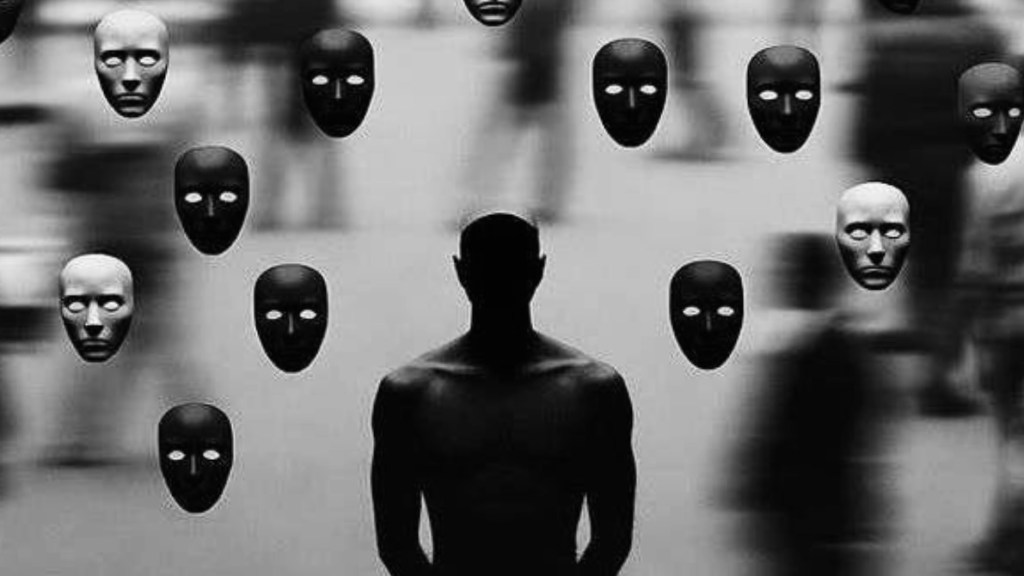
10 Male Beauty Archetypes and what it maybe telling you.
I have a theory.
When women say, “I have a type,” I don’t think we’re always talking about what we think we’re talking about.
Maybe you swear you have a type. Tall. Bearded. Bald. Athletic. Artistic. Tattooed. Pretty. Polished. Status.
But every now and then, you come across a man who looks nothing like the type you usually go for, yet something about him still pulls you in. You can’t quite explain the attraction. He doesn’t fit your usual preferences, but somehow, he has your attention.
So maybe your type isn’t actually a look.
Maybe you’re responding to an archetype.
Because there isn’t just one way for a man to be attractive, and there isn’t just one way for masculinity to present itself.
Some feel dangerous or sensual.
Some look like they would ruin your life and somehow you’d leave them a five-star review.
And some are so beautiful you briefly understand why ancient civilizations built statues.
Different men activate different things in us.
So I started thinking about male beauty in terms of ten archetypes.
These archetypes describe different expressions of masculinity, not a man’s character. They show us what we may be attracted to, not who a man actually is.
Because that’s where this gets interesting.
Before We Get Into the Men…
I didn’t invent the idea of masculine archetypes.
Four of the archetypes I’m using here, the King, Warrior, Magician, and Lover, come from Robert Moore and Douglas Gillette’s 1990 book King, Warrior, Magician, Lover: Rediscovering the Archetypes of the Mature Masculine.
Their work, influenced by Jungian psychology, explores these four figures as patterns of mature masculine development.
I’m borrowing those archetypes for a slightly different conversation.
I’m interested in attraction.
What happens when we look at masculinity not only through personality, but through beauty, presentation, energy, and, perhaps most interestingly, the things women imagine when we encounter different kinds of men?
So I’ve expanded the lens.
Alongside Moore and Gillette’s King, Warrior, Magician, and Lover, I’m using six additional cultural and character archetypes: the Rogue, Prince, Sage, Gentleman, Boy Next Door, and Wild Man.
Together, they give us ten different expressions of male attractiveness.
This isn’t a psychological test, and I’m not suggesting you can determine a man’s character simply by looking at his face. Quite the opposite.
I’m interested in what happens inside us when we look at him.
Because the archetype you assign to a man may tell you less about who he actually is and a whole lot more about what you’re hoping to find.
10 Male Beauty Archetypes
The King
Represents authority, leadership, confidence, and presence. His appeal comes from appearing composed, capable, established, and comfortable taking up space.
The Warrior
Represents strength, discipline, intensity, and physical confidence. His appeal comes from a sense of toughness, determination, protection, and masculine edge.
The Lover
Represents sensuality, affection, warmth, and emotional expression. His appeal comes from intimacy, romance, pleasure, and a masculinity that feels comfortable with tenderness and desire.
The Rogue
Represents rebellion, unpredictability, independence, and edge. His appeal comes from mystery, excitement, rule breaking, and the sense that he cannot easily be contained.
The Prince
Represents beauty, elegance, refinement, and youthful masculinity. His appeal comes from polish, artistry, style, grooming, and a form of masculinity that can be beautiful without needing to appear rugged.
The Sage
Represents wisdom, intelligence, thoughtfulness, and depth. His appeal comes from knowledge, perspective, restraint, and the impression that his mind is one of his most attractive qualities.
The Magician
Represents creativity, transformation, imagination, and mystery. His appeal comes from originality, complexity, reinvention, and the feeling that there is always more to discover about him.
The Gentleman
Represents sophistication, manners, cultivation, and social grace. His appeal comes from polish, intentionality, good grooming, etiquette, and knowing how to conduct himself.
The Boy Next Door
Represents familiarity, warmth, accessibility, and ease. His appeal comes from being naturally likable, approachable, comfortable, and someone who feels easy to imagine in everyday life.
The Wild Man
Represents instinct, freedom, physicality, and raw masculinity. His appeal comes from ruggedness, independence, strength, and an untamed quality that feels more primal than polished.
What Does Your Type Say About You?
Now think about which archetype attracts you and why.
More importantly, how does that archetype make you want to feel? Protected? Desired? Feminine? Secure? Excited? Relaxed? Provided for? Seen?
Two women can be attracted to the same archetype for completely different reasons. One woman may choose the King because she values leadership. Another maybe attracted to his status. Another may be drawn to his ability to provide and the sense of security that provision represents.
Same archetype. Different desire.
Your attraction isn’t only telling you what you like in a man. It may also be telling you something about how you want to feel in a relationship.
Attraction & Compatibility Are Not the Same Thing
The archetype that attracts you isn’t necessarily the archetype you’re most compatible with.
You maybe drawn to the excitement of a Rogue but feel more secure with a Gentleman. You may appreciate the comfort of the Boy Next Door but crave the passion of a Lover. You maybe physically attracted to a Prince while desiring the leadership, stability, or provision you associate with a King.
Attraction tells you what pulls you in. Compatibility asks whether that person can actually meet your needs, values, and lifestyle.
The goal isn’t to judge what attracts you. It’s to understand the difference between what excites you and what sustains you.
And Please Stop Giving Men Qualities They Haven’t Demonstrated
This is where archetypes become a mirror.
A man can look like a King and have absolutely no leadership ability.
A man can look like a Warrior and protect nobody.
A man can look like a Lover and be emotionally unavailable.
A man can look like a Gentleman and have terrible manners.
A man can look like a Sage and say the dumbest thing you’ve heard all week.
We project stories onto attractive people constantly.
That’s why understanding your archetype can be useful.
Your attraction tells you something about you. His appearance does not necessarily tell you the truth about him.
And baby, those are two very different datasets.
So What’s Your Type?
Maybe your type is the King.
Maybe it’s the Lover.
Maybe it’s the Rogue.
Or maybe you’re drawn to a combination of archetypes. You want the leadership of the King, the passion of the Lover, and just enough of the Rogue to keep things interesting.
Understanding the combination can tell you even more about what you’re looking for.
Once you recognize your pattern, the question isn’t, Why do I keep liking men like this?
The question becomes, How would I feel with a man like this?
Maybe you want to feel softer. Protected. Desired. Provided for. Intellectually stimulated. Sexually alive. Maybe you want adventure, or maybe you’re tired of carrying everything and want to feel like you can finally relax.
Your type can reveal those desires, but it can’t tell you whether the man in front of you is actually capable of fulfilling them.
So enjoy the beautiful men. Pick your King. Pick your Warrior. Pick your Lover. Pick that Rogue.
But after you’ve finished looking at him, look at yourself.
Because your attraction maybe telling you exactly what you want to experience next.
References & Inspiration
This article draws inspiration from established work on psychological, mythological, and cultural archetypes. The ten archetypes presented here have been adapted and expanded into a beauty and attraction framework for exploring the different expressions of masculinity women may respond to.
Moore, Robert L., and Douglas Gillette. King, Warrior, Magician, Lover: Rediscovering the Archetypes of the Mature Masculine. HarperSanFrancisco, 1990.
Moore and Gillette’s work explores the King, Warrior, Magician, and Lover as four archetypes of mature masculine psychology. These four archetypes provide part of the foundation for the framework used in this article.
Pearson, Carol S. Awakening the Heroes Within: Twelve Archetypes to Help Us Find Ourselves and Transform Our World. HarperSanFrancisco, 1991.
Pearson developed a twelve-archetype model that includes figures such as the Sage, Warrior, Lover, Magician, and Ruler. Her broader work on archetypes also provides a foundation for understanding recurring patterns of human motivation and identity.
Mark, Margaret, and Carol S. Pearson. The Hero and the Outlaw: Building Extraordinary Brands Through the Power of Archetypes. McGraw-Hill, 2001.
Mark and Pearson applied archetypal theory to identity and branding, including the Outlaw and Regular Guy/Gal archetypes. The Rogue and Boy Next Door used in this article are contemporary, attraction-focused interpretations of similar cultural patterns.
Bly, Robert. Iron John: A Book About Men. Addison-Wesley, 1990.
Bly’s exploration of the Wild Man through mythology and the Brothers Grimm tale Iron John influenced modern discussions of instinctive, untamed, and mythopoetic masculinity.




Leave a Reply