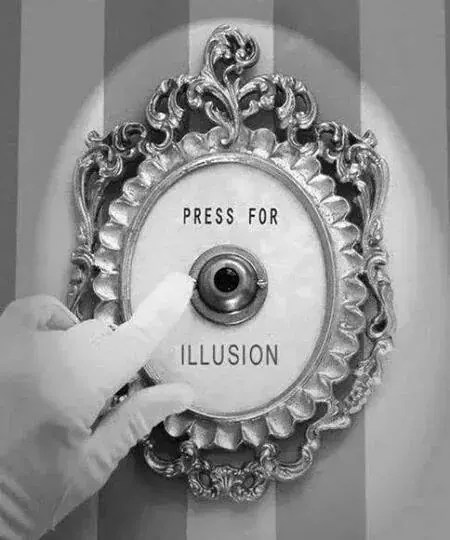
I had a thought the other day. What if the chains never disappeared?
What if they just changed?
When we think about slavery, we picture iron shackles, plantations, and forced labor. Those horrors were real, and nothing in modern life should ever be confused with the brutality of slavery.
But this isn’t an article about slavery.
It’s about control. It’s about dependency. It’s about asking whether freedom is more than simply being able to walk away.
Because what if you can’t?
Not because someone physically won’t let you, but because your lifestyle won’t.
Maybe that’s what golden handcuffs are.
A six-figure salary you can’t afford to lose. A mortgage. A luxury car. Credit cards. Student loans. A life you’ve worked so hard to build that you’re no longer free to leave it.
The chains didn’t disappear. They just became more attractive.
The Willie Lynch Framework
Whether the Willie Lynch Letter is authentic is still debated, and many historians believe it isn’t.
Even so, people continue discussing it because the framework raises larger questions about power, dependency, and social control.
The framework describes a system designed to maintain control by:
Create Dependency
When people depend on a system for their survival, they’re often less willing to challenge it.
Think about someone who stays in a job they hate because losing it also means losing their health insurance, retirement contributions, or the ability to pay their mortgage.
The question becomes:
Can economic dependency limit freedom, even when legal freedom exists?
Encourage Division
History has shown that divided groups often struggle to organize around shared interests.
Today, division can take many forms: race, class, political identity, religion, or even online culture.
When people spend all of their energy fighting one another, they often spend less time asking larger questions about the systems they all participate in.
Reward Obedience
Every society rewards certain behaviors.
Students are rewarded for following rules.
Employees are rewarded for meeting expectations.
Consumers are rewarded for spending through loyalty programs, credit card points, and exclusive memberships.
The question isn’t whether rewards are good or bad.
The question is:
What behaviors are we encouraging?
Turn People Into Economic Assets
Under chattel slavery, people were literally treated as property.
Modern societies are fundamentally different.
But critics argue that we can still fall into the habit of measuring people primarily by their economic value.
What’s your salary?
How productive are you?
What’s your net worth?
What do you do for work?
Those questions often come before:
Who are you?
What do you value?
What kind of person are you becoming?
Psychological Conditioning
Perhaps the most enduring idea isn’t physical control.
It’s mental control.
Advertising tells us we’re incomplete until we buy something.
Social media encourages constant comparison.
Work culture often celebrates burnout as ambition.
Over time, these messages can shape what we believe success is supposed to look like.
Whether those exact words came from Willie Lynch isn’t really the point.
The bigger question is this:
Do modern systems of power still rely on some of these same principles?
Not necessarily through slavery or physical force, but through economics, institutions, media, consumer culture, or even our own beliefs.
If we no longer wear iron chains, have we created new forms of dependency that are harder to recognize because they feel normal?
The Business of Keeping Us Busy
Somewhere along the way, being busy became a personality.
We wear exhaustion like a badge of honor. We apologize for taking vacations. We feel guilty for resting.
Ask someone who they are, and most people answer with their job. It’s almost as if productivity became our identity.
Capitalism Isn’t the Villain
I’m not arguing that capitalism is evil.
Capitalism has created innovation, lifted millions out of poverty, and created incredible opportunity.
The problem isn’t capitalism. The problem is when we stop questioning our relationship with it.
When earning becomes consuming. When consuming becomes identity. When identity becomes obligation. When obligation becomes captivity.
That’s when the golden handcuffs start to tighten.
We’ve Been Asking These Questions for a Long Time
Karl Marx believed workers could become alienated from their work, where work begins to define the person instead of serving them.
Erich Fromm argued that freedom can be uncomfortable, leading many people to choose security and conformity over independence.
bell hooks reminded us that systems of domination also shape the way we think about ourselves and our relationships. Liberation, she argued, is both political and deeply personal.
Together, these ideas raise a simple question: Is freedom just about rights, or is it also about having real choices?
Breaking the Golden Handcuffs
Freedom may begin with asking better questions.
What do I actually need?
Can I walk away from a life that no longer aligns with my values?
Do I own my possessions, or do they own me?
Financial literacy, intentional living, meaningful relationships, and psychological independence all expand our freedom to choose.
Conclusion
This isn’t an argument that modern capitalism is slavery. The horrors of slavery were unique and should never be minimized.
Instead, it’s an invitation to ask whether invisible forms of dependency can quietly replace visible forms of control.
Perhaps freedom isn’t measured only by what we’re allowed to do.
Perhaps it’s measured by what we’re actually free to choose.
Further Reading
The ideas explored in this essay draw from a range of historical, philosophical, and social thinkers. Whether you agree with them or not, each offers a different perspective on power, freedom, labor, and human behavior.
- The Willie Lynch Letter (Google Books) (Note: Most historians consider the document inauthentic, but it remains influential in discussions about psychological control and race.)
- The Communist Manifesto by Karl Marx and Friedrich Engels
- Escape from Freedom by Erich Fromm
- Discipline and Punish by Michel Foucault
- Teaching to Transgress by bell hooks
- All About Love by bell hooks







Leave a Reply