I was sitting here thinking about Black hair care when something hit me.
Every time Black women build something for ourselves, somebody eventually comes along and decides they know how to run it better.
First, we’re ignored.
Then we’re mocked.
Then our businesses become profitable.
Then suddenly there are new rules, new regulations, new experts, and somehow we’re no longer the ones benefiting from what we built.
When you start looking at American history through that lens, the pattern becomes difficult to ignore.
Take Black hair care.
Black women didn’t get into hair care because it was trendy. We got into hair care because nobody else was serving us. We created products for our hair, opened salons in our communities, trained one another, and built thriving businesses from the ground up. Beauty shops became more than places to get your hair done. They became gathering places, support networks, and economic engines.
For many Black women, a beauty license represented independence. It represented the ability to feed your family without relying on anyone else.
But over time, as the industry grew, so did the barriers. Licensing requirements increased, startup costs climbed, and large corporations entered the market. The demand remained, but ownership began shifting away from the communities that created the opportunity in the first place.
Then there is midwifery.
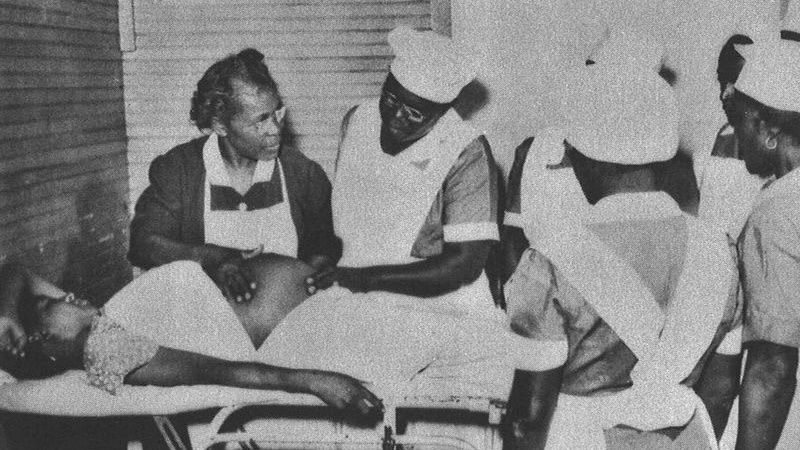
Black women didn’t become midwives because it was glamorous. They became midwives because communities needed them. For generations, Black midwives delivered babies, cared for mothers, and provided healthcare when hospitals and physicians were inaccessible or unwilling to serve Black families.
As medicine became increasingly professionalized, stricter credentialing and licensing requirements emerged. While some reforms improved safety, many experienced Black midwives found themselves pushed out of the profession. Knowledge that had been passed down through generations was suddenly viewed as inferior to institutional credentials.
The profession survived.
The women who built it often did not.
The same thing can be said about childcare.
Black women have always provided care. We cared for children, elders, neighbors, and entire communities. Long before childcare became a billion-dollar industry, Black women were operating home-based childcare businesses that allowed working families to survive.
Today, childcare providers face regulations, insurance requirements, inspections, licensing fees, and compliance costs that many small operators struggle to manage. Safety matters. Standards matter. But the reality is that large organizations are often better equipped to absorb these costs than independent providers.
Again, the service remains.
The need remains.
But ownership changes.
And that brings me to federal employment.
For decades, government work has been one of the most reliable pathways into the middle class for Black women. Stable salaries, healthcare benefits, retirement plans, and advancement opportunities created economic security for generations of families.
So when I hear conversations about cutting government jobs, reducing agencies, or shrinking the federal workforce, I don’t just hear politics.
I hear Black women.
I hear the administrator.
I hear the coordinator.
I hear the analyst.
I hear the woman who worked hard, earned her degree, and finally found stability.
Because history has shown us that when pathways to economic mobility disappear, Black women often feel the effects first.
This isn’t a story about victimhood.
It’s a story about contribution.
Black women have repeatedly built industries, professions, and support systems that strengthened entire communities. The question isn’t whether we are capable of creating opportunities. History has already answered that.
The question is why so many of the systems Black women helped build eventually become harder for Black women to own, control, and benefit from.
When you study Black beauty culture, midwifery, childcare, education, public service, and countless other industries, you begin to notice a recurring theme.
Black women build.
OTHERS institutionalize.
Black women create.
OTHERS capitalize.
Black women carry communities.
OTHERS inherit the infrastructure.
Whether that pattern is coincidence, economics, policy, or some combination of all three, it deserves examination.
Because if we are serious about understanding economic inequality, we must also be willing to ask who built the ladder, who climbed the ladder, and who eventually pulled it away.
Hello,
I’m Sim0ne,

Welcome to my corner of the internet. Whether you’re interested in personal growth or thoughtful conversations, I hope you find something that resonates with you.
Explore More
Burn, Baby. Burn!
Light the match. I’ll show you what to do with the ashes. Join the list.



 Burn Your Crocs
Leave a comment