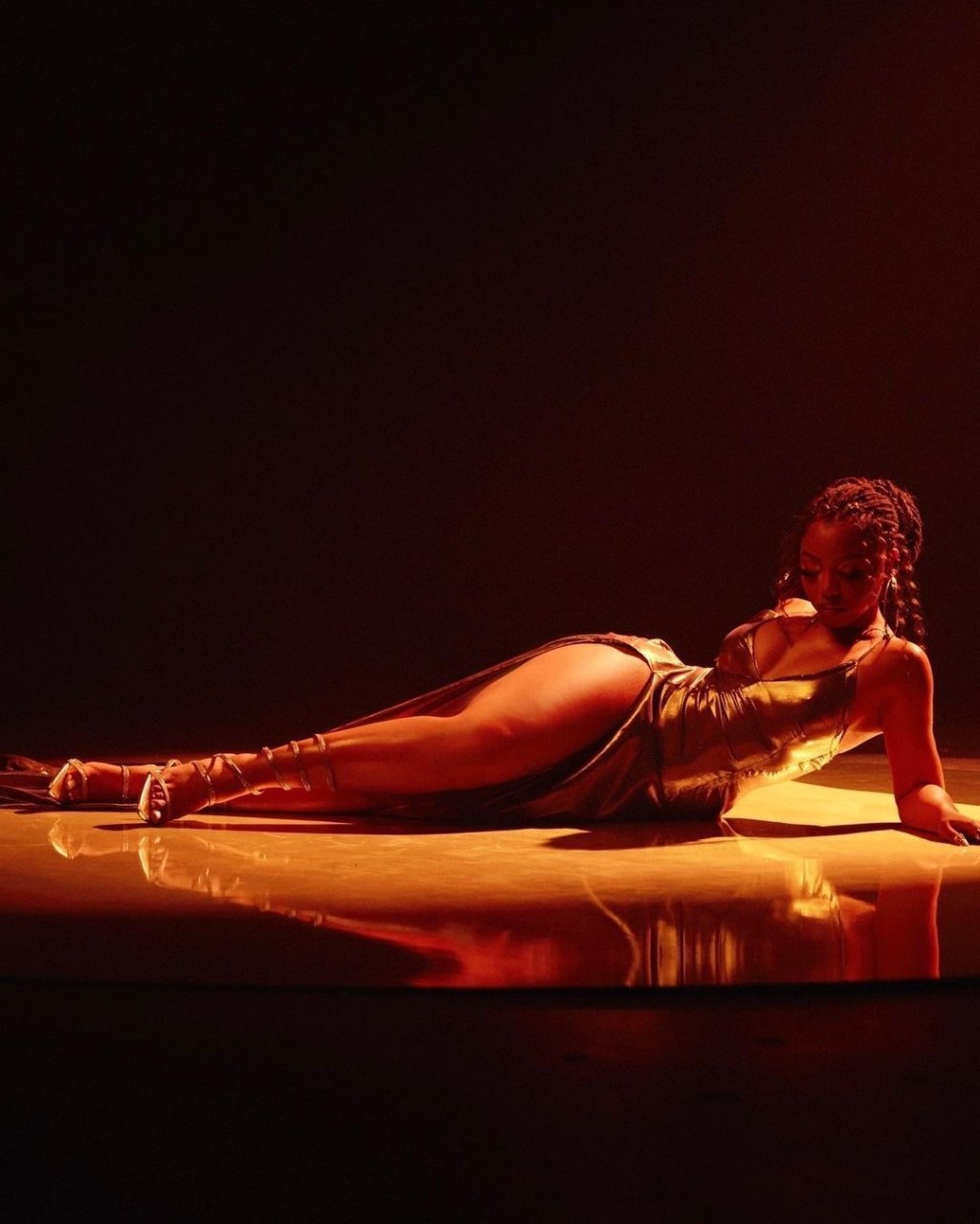
Fashion didn’t invent the silhouette. It learned how to build it. Across fashion history, body ideals have shifted, but the fascination with curves has remained remarkably consistent. In the Victorian era, bustles were designed to exaggerate hips and fullness, engineering a shape that closely resembled bodies many Black women already carried naturally. What changed wasn’t the form, but who was allowed to wear it without consequence.
Fashion relied on structure to manufacture the silhouette when the body itself did not naturally provide it. Bustles, padding, and rigid undergarments were used to create volume on the breast, hips, and bottom. The silhouette was deliberate. Desired. Engineered. What’s striking isn’t the construction itself, but the contradiction it reveals. When curves were built, they were refined. When they were natural, they were often read as excessive or sexualized.
The case of Sarah Baartman exposes the contradiction clearly. Her body was publicly displayed and dissected for possessing the very proportions fashion would later recreate through structure and padding. On her, curves were not refined but criminalized, eroticized, and stripped of dignity. The silhouette could be admired but the woman could not.
Fashion didn’t invent the shape. It decided when the shape was acceptable.
When the bustle faded, control didn’t disappear. It reversed. The flapper era of the 1920s introduced a new ideal that was thin, straight, and almost boyish. Curves were no longer constructed or celebrated. They were concealed. Breasts were flattened. Hips were minimized. Dresses hung loose, favoring bodies that disappeared into fabric rather than shaped it.
This shift wasn’t just aesthetic. It was cultural. As women gained more visibility in public life, fashion responded by stripping the body of exaggeration altogether. Where Victorian fashion built curves, flapper fashion erased them. The ideal woman became narrow, angular, and restrained.
What’s revealing is how easily the standard changed, not because bodies did, but because permission did. Fashion moved from constructing curves to rejecting them entirely, depending on what version of femininity felt safest to endorse at the time. Bodies that naturally carried fullness didn’t vanish when thinness became fashionable. They simply fell further outside the frame of what was considered modern, elegant, or acceptable.
For Black women especially, whose bodies have long been read as excessive regardless of the trend, fashion’s pendulum rarely brought relief. When curves were in, the shape was celebrated. When thin was in, the same bodies were disciplined. Admired without protection. Referenced without regard. The silhouette was allowed to be fashionable, but the woman wearing it was rarely afforded the same grace.
Fashion has always known the shape. It has built it, buried it, revived it, and renamed it. What it has struggled with is consistency, not in design, but in dignity.
If the silhouette keeps returning, what does that say about the bodies fashion has repeatedly tried to control?
Self-ownership begins when we stop waiting for trends to validate what has always been ours.

 Burn Your Crocs
Leave a comment